Electricity
Information about electrical infrastructure, meters, breakers, and provider details.
Provider Details
- Company: Montajes Eléctricos Portillo S.A. / Distribuciones Eléctricas Portillo (CHC Energía)
- Local Office: Avda. Blas Infante, 4, 04617 Palomares (Cuevas del Almanzora, Almería)
- Phone: +34 950 61 80 35
- Support / Freephone: 900 373 272
- Email: info@portillosa.com / chcenergia@portillosa.com
- Official Website: portillosa.com
Garage Electrical Panel & Swimming Pool Pumps
Location: Underground car park (basement level -1), in the corridor leading to the lift.
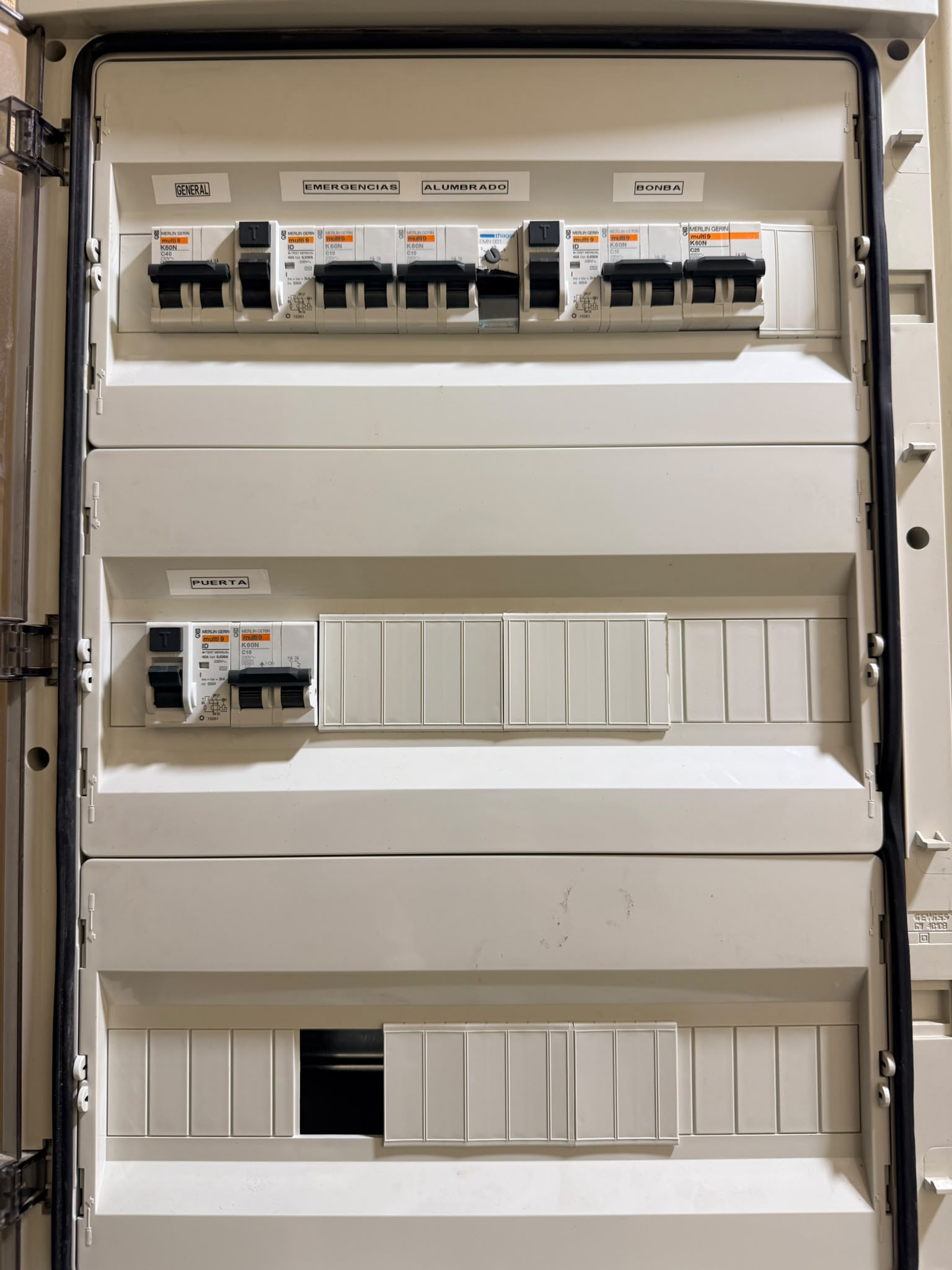
Garage electrical panel (Gate, Alumbrado, C10 & C25 pool pumps) in the car park corridor next to the lift.
This control box governs multiple communal garage and pool systems:
- Garage Entrance Gate (Puerta): Circuit controlling the motorized vehicle access gate at the front of the garage.
- Garage Lighting (Alumbrado): Circuit supplying the illumination for the underground car park spaces and corridors.
- Fuse C25 (Filter Pump): Dedicated circuit for the main pool filtration pump, which handles the highest electricity consumption.
- Fuse C10 (Water Jets): Dedicated circuit for the secondary water jet pump, operating with a lower electricity consumption.
First Floor Electrical Panel A
Location: Hidden behind the large poster on the wall directly in front of the entry door. Remove the poster to access the box.
Panel Scope: Common Indoor Services, Telecommunications, Lighting & Pool/Utility Controls.
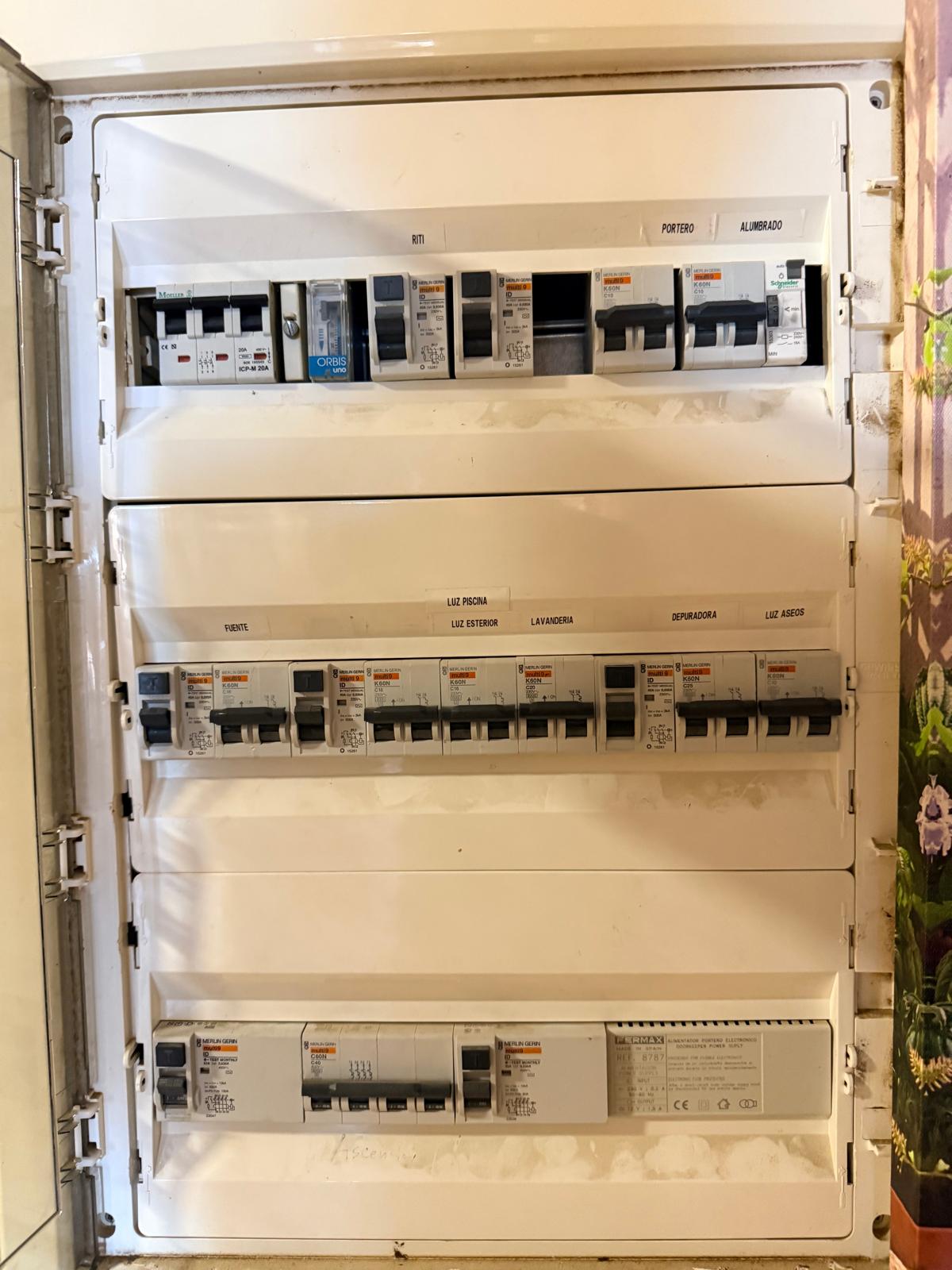
First floor electrical panel A.
Top Row Circuit Breakdown:
- Telecommunications Infrastructure (RITI): Telecommunications infrastructure power supply (ICT / Registro de Infraestructuras de Telecomunicacion). Powers the building's central telecom and TV distribution amplifiers.
- Intercom System (Portero): Intercom system power supply. Feeds the Fermax electronic door keeper power supply unit located directly on the right side of the bottom row.
- Lighting (Alumbrado): Common area lighting circuit for the internal hallways and stairwells on this floor.
Middle Row Circuit Breakdown:
- Fountain (Fuente): Fountain circuit (pool water feature or decorative fountain pump).
- Pool & Exterior Lighting (Luz Piscina / Luz Exterior): Pool lighting and outdoor perimeter lighting circuits.
- Laundry Area (Lavanderia): Laundry area circuit (supplying washing machine or communal utility outlets).
- Filtration Plant (Depuradora): Pool filtration plant / pump control circuit.
- Restroom Lighting (Luz Aseos): Toilets/bathrooms lighting circuit for communal or service washrooms.
Bottom Row Components:
- Elevator (Ascensor): Elevator / lift power supply circuit (labeled on the lower frame).
- Intercom Power Supply (Fermax 8787): Electronic door keeper power supply unit (Alimentador Portero Electronico) providing low-voltage DC power for the building's intercom and door-release system.
First Floor Electrical Panel B
Location: First floor, located on the left-hand wall between the main entrance door and the door leading to the swimming pool.
Panel Scope: Apartment or Main Utility Power Distribution (General Protection, Lighting, Common/Salon Circuits, Kitchen Appliances, and Heavy-Load Equipment).
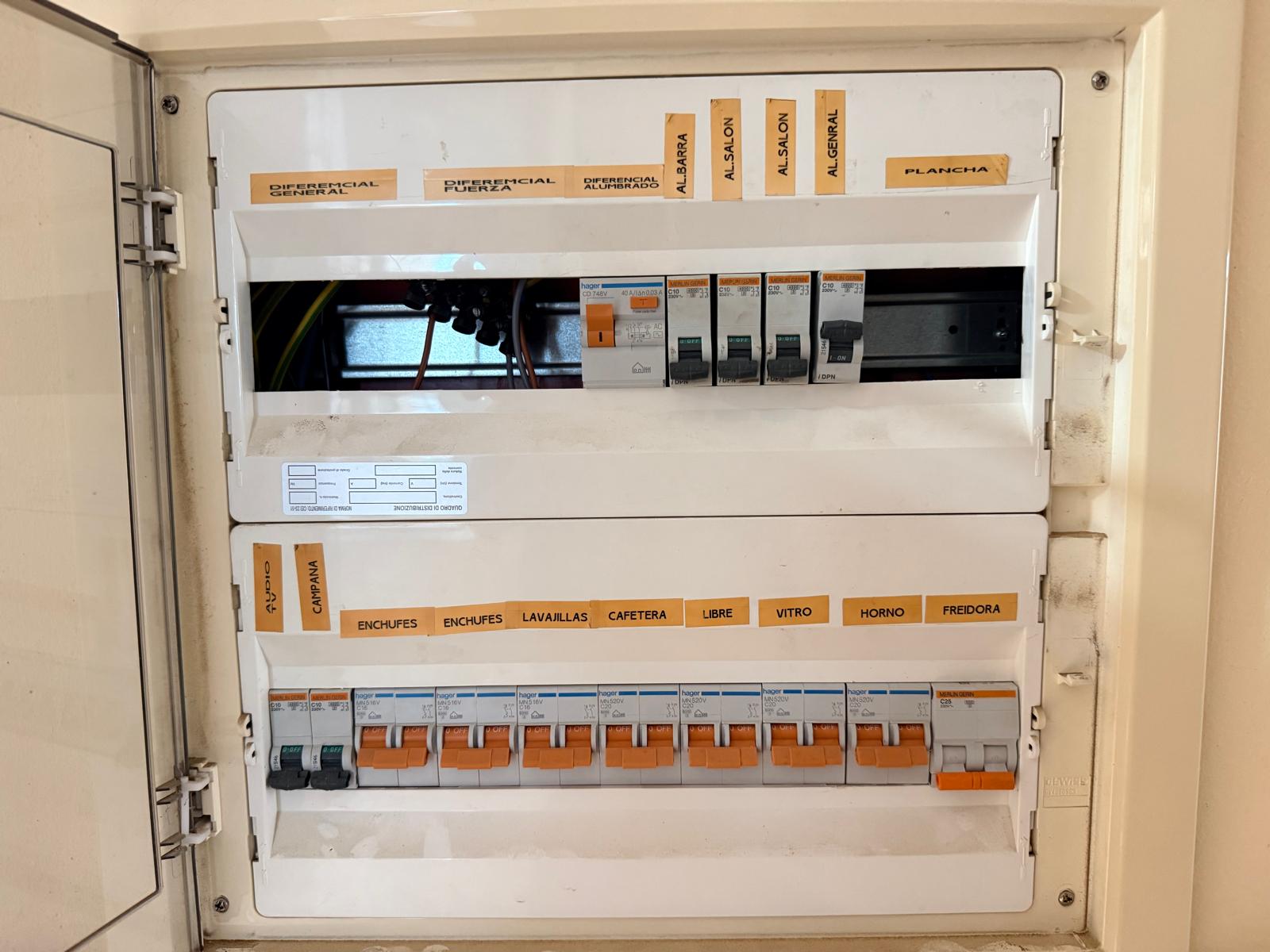
First floor electrical panel B.
Top Row Circuit Breakdown (Protection & Lighting / Salón):
- General Differential / Power Differential / Lighting Differential (Diferencial General / Diferencial Fuerza / Diferencial Alumbrado): Main residual current circuit breakers (RCDs) providing earth-leakage protection for general lines, power outlets, and lighting circuits.
- Bar Lighting / Lounge Lighting (Al. Barra / Al. Salon): Lighting circuits for the main lounge/living area.
- General Lighting (Al. General): General lighting circuit.
- Iron / Utility (Plancha): Dedicated circuit for an iron or heavy utility appliance.
Bottom Row Circuit Breakdown (Appliances & Heavy Loads):
- Audio & Extractor Hood (Audio / Campana): Audio systems and kitchen extractor hood circuits.
- Power Outlets (Enchufes): General power outlet circuits (multiple standard socket lines).
- Dishwasher (Lavajillas): Dedicated circuit for the dishwasher.
- Coffee Machine (Cafetera): Dedicated circuit for the coffee machine or kitchen utility outlets.
- Spare / Free (Libre): Spare/available circuit breaker.
- Ceramic Hob (Vitro): Dedicated high-load circuit for the ceramic/induction hob (cooktop).
- Oven (Horno): Dedicated high-load circuit for the oven.
- Deep Fryer (Freidora): Dedicated high-load circuit for a deep fryer or auxiliary heavy kitchen appliance.
Main Electrical Cabinet & Smart Meters
Location: Outdoor, located at the entrance to the underground car park on the right-hand side.
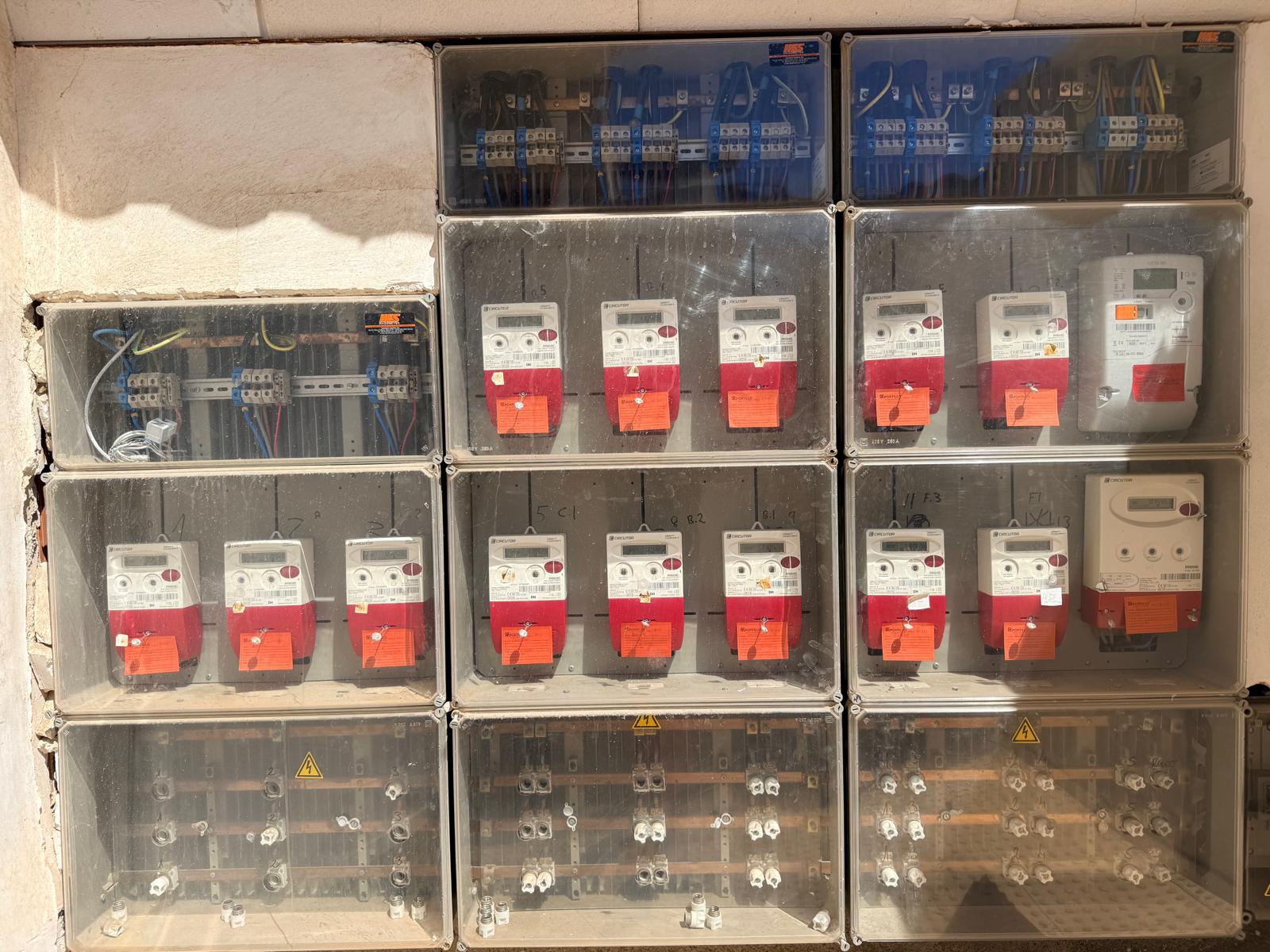
Main outdoor electrical cabinet containing the utility meters.
Technical Overview: Explanation of Meter Types
This building features three different types of digital electricity meters across the installation, split into individual apartments and shared services.
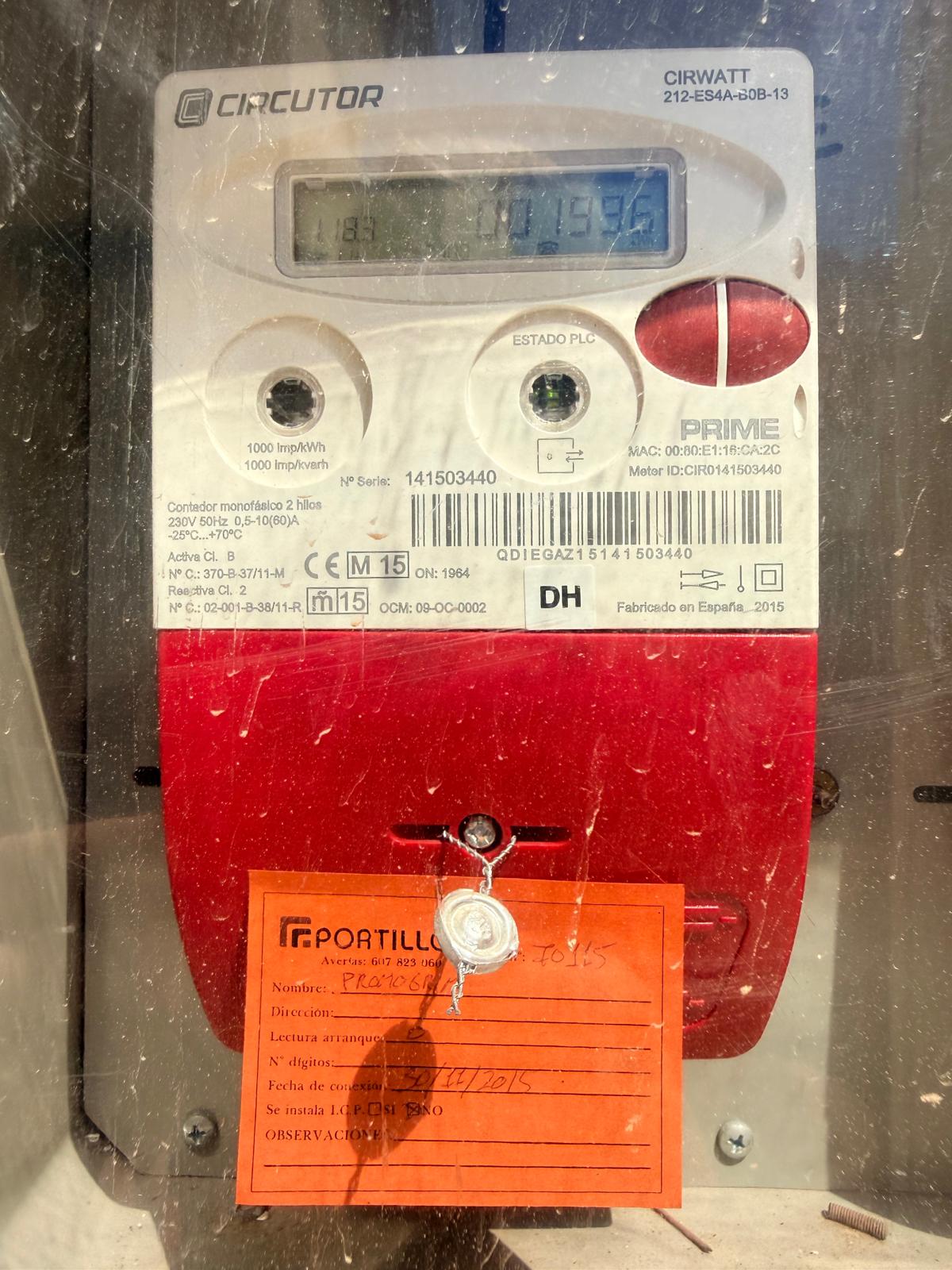
1. The 13 small residential meters – one per apartment.
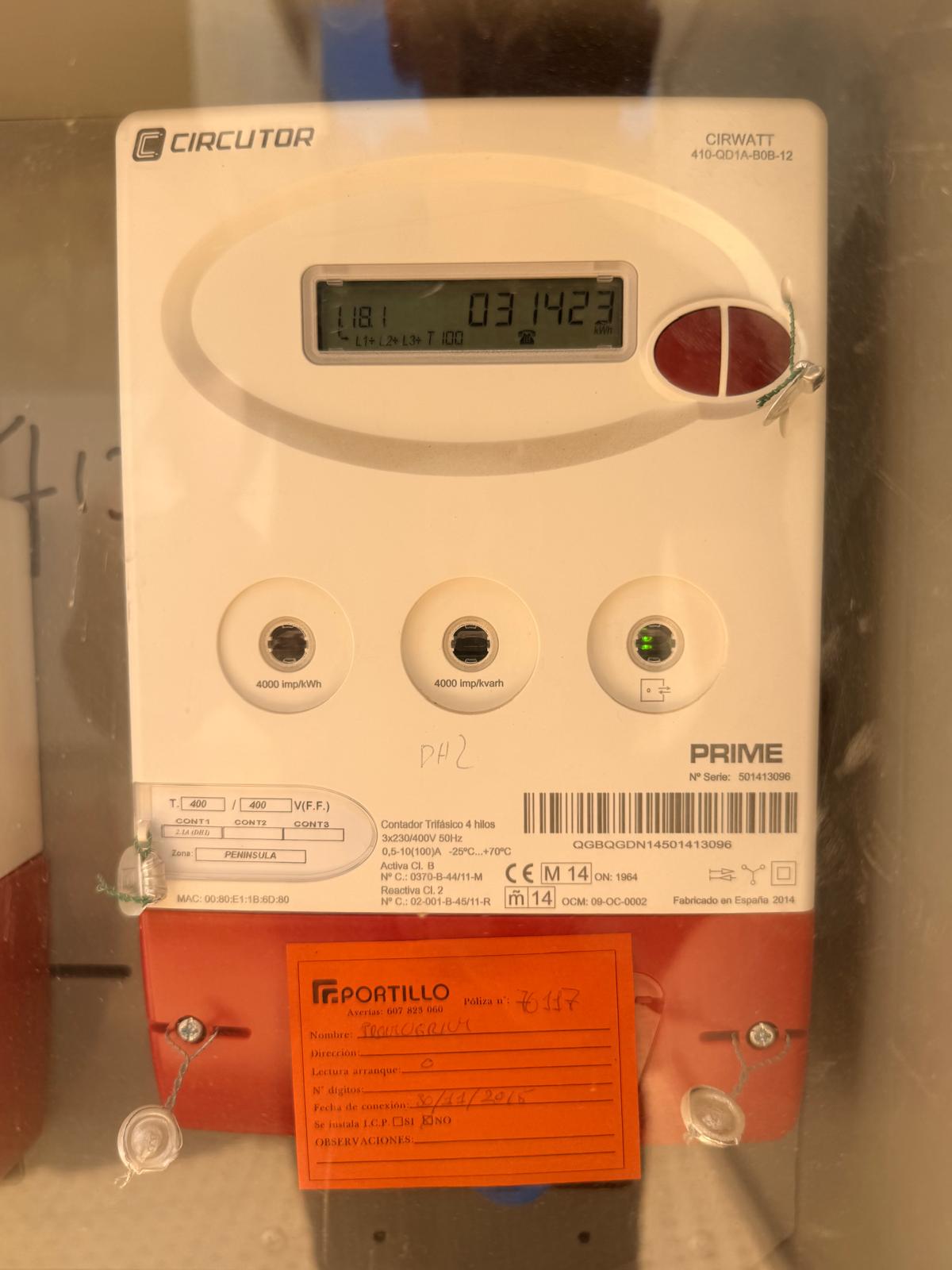
2. Large meter A – common areas.
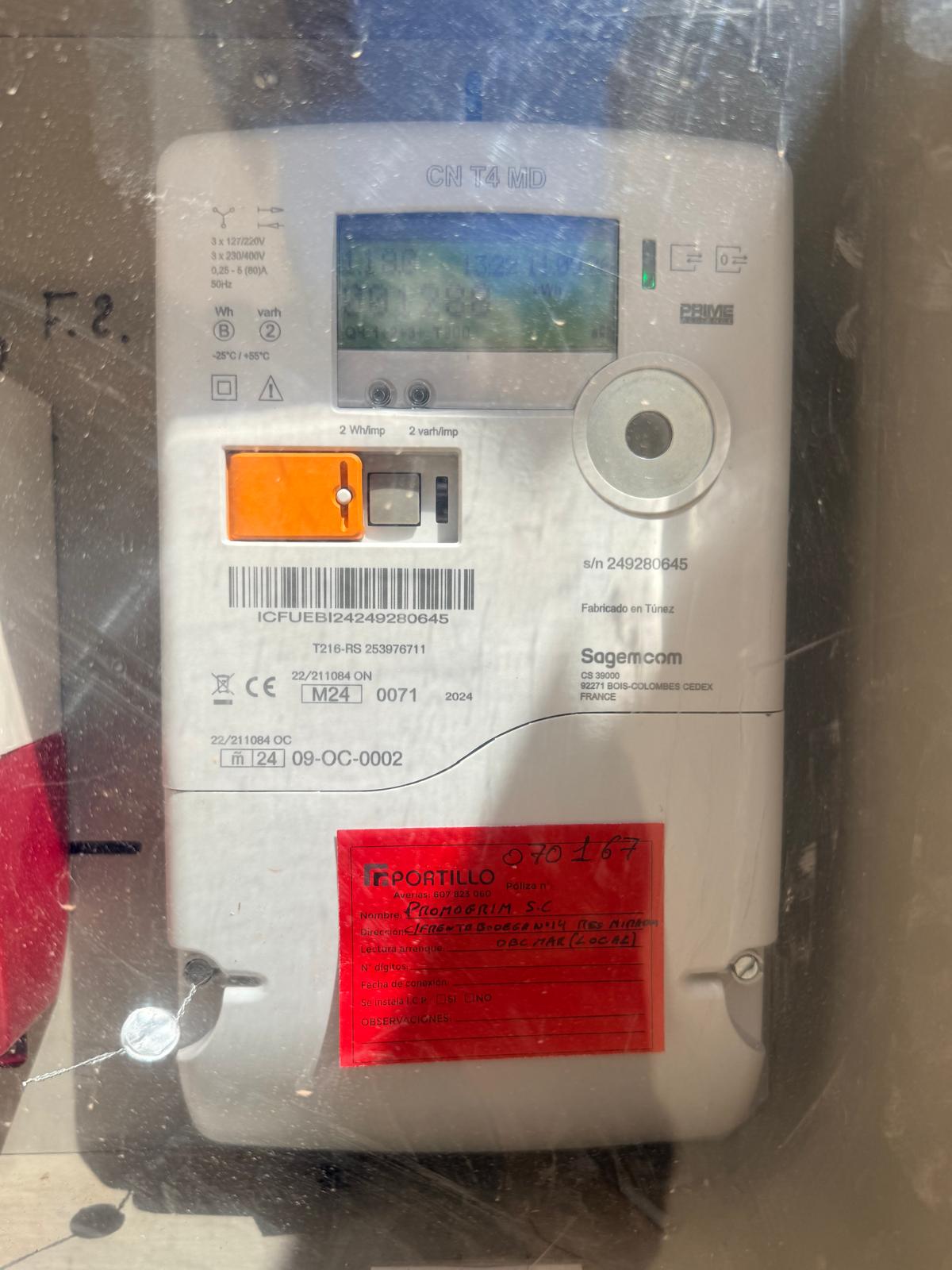
3. Large meter B – additional utility or pool installation.
1. The 13 small meters – one per apartment
These are the individual consumption meters:
- They measure only the consumption of each individual apartment.
- They are used for billing per owner or resident.
- They record kWh, peak/off-peak rates, and communicate via PRIME or PLC.
- They are typically single-phase or three-phase depending on the apartment specs.
Standard practice in any apartment building: 1 meter per home.
2. The 2 larger meters – shared utilities
These are not assigned to individual apartments, but serve the building as a whole:
Large Meter A – Common Areas
Measures the consumption of:
- Stairwell lighting
- Lifts
- Boost pumps
- Ventilation
- Emergency lighting
- Automatic gates
- Garden lighting
- Technical rooms
This is the general consumption distributed via the owners' association (Comunidad de Propietarios).
Large Meter B – Additional Installation (Optional)
Depending on the building setup, this covers:
- Garage power consumption (gates, lighting, ventilation)
- Swimming pool installation (pumps, filtration, lighting)
- Garden irrigation
- Telecom / antenna / router / CCTV systems
- Solar / PV feed-in (if applicable)
Many buildings have two shared meters because the garage or swimming pool operates on a separate supply contract line.
Why are the shared meters larger?
- They are three-phase (400 V).
- They measure higher electrical load capacity.
- They include advanced features (remote communication, load control, remote reading telemetry).
- They are typically industrial-grade units rather than standard residential hardware.
Summary
- 13 small meters: Consumption per apartment
- 1 large meter: Common building areas
- 1 large meter: Garage / swimming pool / technical installations
- Meter Technology & Reading: All installed electricity meters are digital smart meters (standardized utility models equipped with an LCD display and optical interface) featuring automated remote readout and smart grid telemetry. This allows Portillo to continuously record consumption data remotely without requiring manual, on-site meter readings.
Building Main Switch / Master Breaker (13 Apartments)
Description: The building's main switch / general interruptor serving all 13 apartments. This is a critical safety component and must be used correctly.
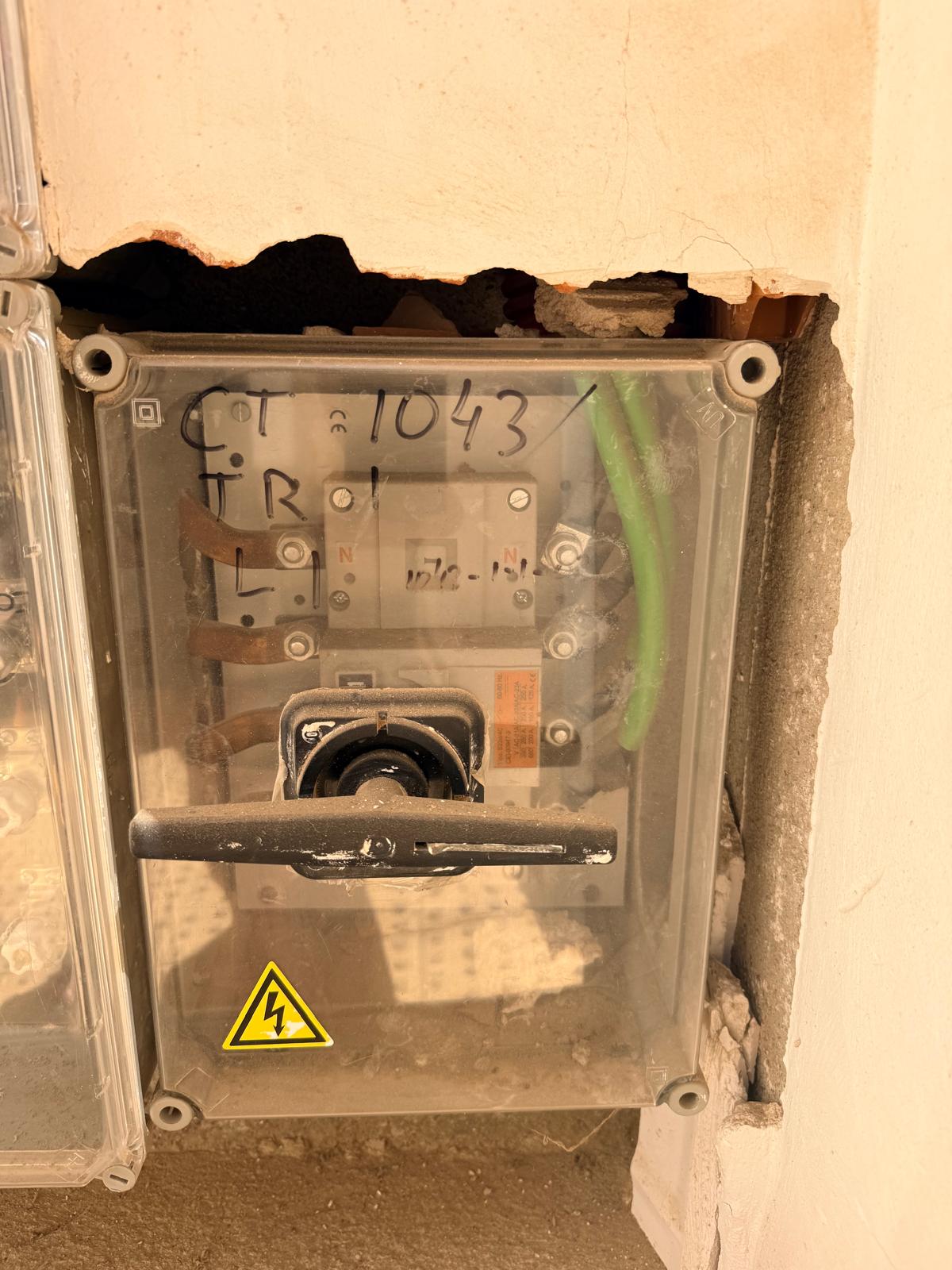
Main building switch / mechanical master breaker cabinet.
What is this exactly?
This is the general switch (interruptor general) of the building. It shuts off all power supply to the entire building in a single movement. It is not a standard fuse, but a mechanical master breaker.
When must this main switch be operated?
-
In case of fire (Fire department / emergency):
The main switch is used exclusively when the fire brigade or an authorized technician must completely cut off the power to work safely. Examples include:- Fire in the technical room
- Fire in common areas
- Short circuit with danger of electrocution
- Water leakage in electrical shafts
- Smoke development in the main cable
-
Severe electrical hazards (Authorized persons only):
- Electrician
- Technical service / maintenance
- Fire department
- Syndic / building management (if authorized)
When should this switch NOT be used? (Strictly Prohibited for Residents)
- NOT for minor problems in an individual apartment
- NOT to reset a personal/individual fuse
- NOT by residents to “just turn off the power”
- NOT for maintenance of private installations
Shutting down this switch shuts down the entire building: lifts, water pumps, lighting, garages, telecom, everything.
Who is authorized to operate this switch?
- Fire Department: Always authorized to shut it off for safety during emergencies.
- Qualified Electricians: Only during serious electrical risks, main line maintenance, or main distributor inspections.
- Syndic / Building Management: Sometimes authorized, strictly if stipulated in the internal building regulations.
- Residents: NOT AUTHORIZED. Operating this switch by residents can cause property damage, trap lift users, shut down water pumps, interrupt safety systems, and lead to legal liability.